
Why Did Lehman Brothers Collapse? (The 72-Hour Timeline & Forensic Breakdown)
A forensic 72-hour investigation into what happened with Lehman Brothers in September 2008: Repo 105 deception, toxic subprime mortgages, the failed Barclays acquisition, and the global credit crash.
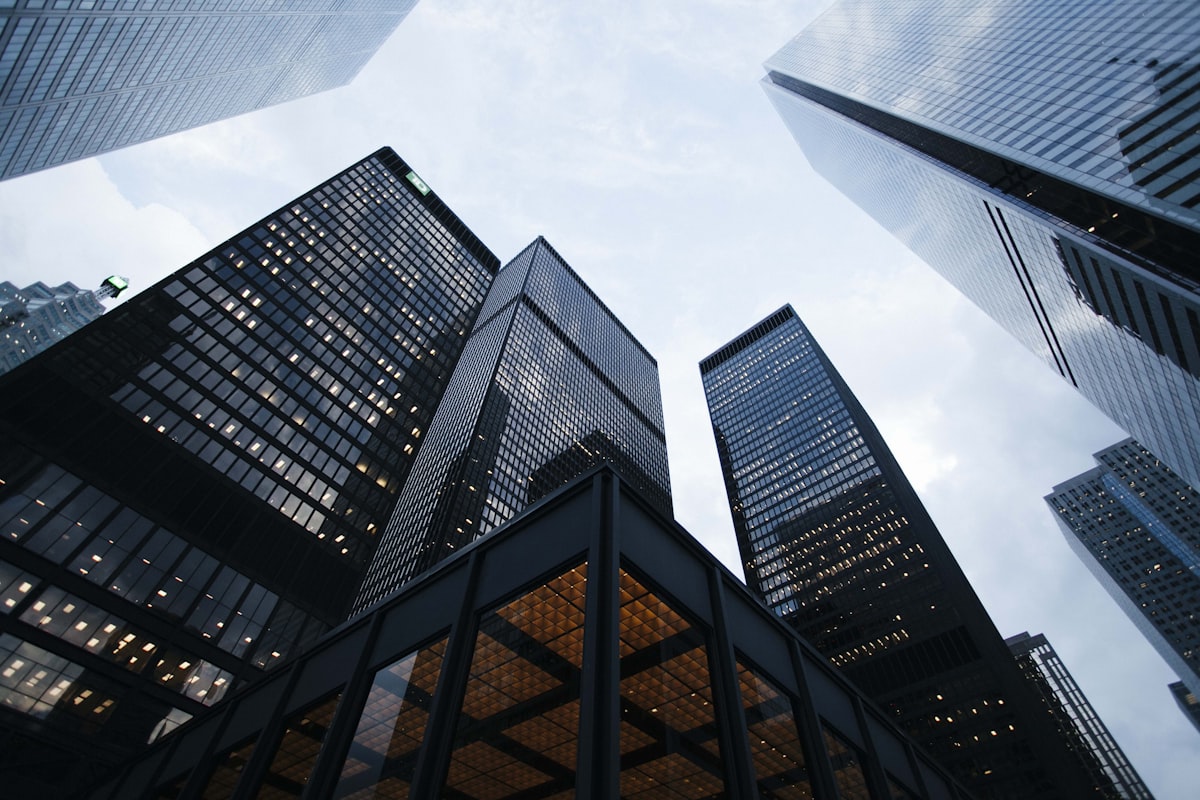
The 158-Year Dynasty & The Aggressive Real Estate Expansion
Founded in 1850 by German immigrant brothers Henry, Emanuel, and Mayer Lehman in Montgomery, Alabama, Lehman Brothers evolved from a regional cotton brokerage into one of Wall Street’s premier investment banking institutions [1,2]. Having survived the American Civil War, the Panic of 1907, the Great Depression, and the 1998 Russian financial crisis, the firm developed an internal culture of fierce survivalism and aggressive risk-taking under longtime Chief Executive Officer Richard S. Fuld Jr. [1,4].
Between 2004 and 2007, as competitors like Goldman Sachs began cautiously trimming mortgage exposure, Lehman aggressively transitioned from a traditional bond trading house into a principal real estate investor [1,2]. The firm amassed an illiquid $85 billion portfolio of commercial and residential property assets—headlined by the heavily indebted $22 billion leveraged buyout of apartment REIT Archstone-Smith—funded almost entirely through volatile short-term overnight borrowing [1,3,5]. By early 2008, Lehman carried an unprecedented balance sheet leverage ratio exceeding 30-to-1 [1,3].
"By 2007, Lehman had accumulated an illiquid $85 billion real estate portfolio on a balance sheet leveraged at over 30-to-1."
Repo 105: The Accounting Maneuver That Masked $50 Billion in Leverage
As the subprime housing crisis deepened throughout 2007 and 2008, public scrutiny focused intensely on Wall Street leverage ratios. To conceal the true extent of its debt from credit rating agencies, counterparties, and investors, Lehman utilized an internal accounting mechanism known as "Repo 105" [1,3].
In a standard repurchase agreement (repo), a financial institution pledges securities as collateral for short-term cash, recording both an asset and a liability. Under Repo 105, Lehman transferred $105 of liquid securities for every $100 of cash received and recorded the transaction under UK legal opinions as an outright "sale" rather than a financing loan [3].
According to the landmark nine-volume bankruptcy investigation by court-appointed examiner Anton R. Valukas, Lehman used Repo 105 to temporarily remove up to $50 billion of toxic assets from its balance sheet at the close of the first and second quarters of 2008 [1,3]. Days after publishing its quarterly earnings showing artificially reduced net leverage, Lehman reversed the transactions and repurchased the assets with borrowed cash, creating what the examiner described as a fundamentally deceptive depiction of financial health [3].
"Under Repo 105, Lehman temporarily scrubbed $50 billion of debt from its balance sheet right before reporting quarterly earnings."
The 72-Hour Weekend at Liberty Street (September 12–14, 2008)
On Friday evening, September 12, 2008, with Lehman’s stock collapsing and clearing banks demanding billions in additional margin collateral, New York Federal Reserve President Timothy Geithner and US Treasury Secretary Henry Paulson summoned the chief executives of Wall Street’s major firms—including Jamie Dimon of JPMorgan Chase, Lloyd Blankfein of Goldman Sachs, and John Mack of Morgan Stanley—to the Federal Reserve Bank of New York on Liberty Street [2,4].
Secretary Paulson informed the gathered executives that, unlike the emergency rescue of Bear Stearns six months earlier, the US government would not commit public taxpayer funds to backstop a Lehman bailout [2,4]. The Wall Street consortium worked frantically across the weekend to structure a private rescue, splitting Lehman into a "good bank" to be acquired by British multinational Barclays and a "bad bank" consortium pool to absorb $40 billion in toxic real estate assets [2,4].
The rescue collapsed on Sunday afternoon when Callum McCarthy, chief executive of the UK Financial Services Authority (FSA), refused to approve the acquisition without a formal US government financial guarantee or a mandatory shareholder vote that could not be organized before Asian markets opened Monday morning [2,4]. Bank of America, the other potential suitor, abruptly pivoted to acquire Merrill Lynch for $50 billion, leaving Lehman with zero prospective buyers [2,4].
The Legal and Solvency Dilemma: Why Bear Stearns Was Saved but Lehman Was Not
The decision to let Lehman Brothers fail generated immense historical controversy. Critics questioned why the Federal Reserve orchestrated an emergency $29 billion backstop for Bear Stearns in March 2008 and an $85 billion takeover of American International Group (AIG) two days after Lehman’s demise, yet allowed Lehman to collapse [2,4,7].
Federal Reserve Chairman Ben Bernanke and Timothy Geithner testified under oath to the Financial Crisis Inquiry Commission that the central bank lacked the legal authority under Section 13(3) of the Federal Reserve Act to lend to an insolvent institution [1,2,4]. Because Lehman’s toxic real estate assets were deeply impaired, the Fed could not obtain the "satisfactory collateral" required by law to secure a multi-billion dollar loan [2,4,7].
Furthermore, policymakers were constrained by intense political backlash following the conservatorship of government-sponsored enterprises Fannie Mae and Freddie Mac the previous week, fostering a widespread miscalculation that the broader financial system had spent six months preparing for and hedging against a Lehman default [2,4,7].
"The Federal Reserve determined that Lehman lacked the adequate collateral required under Section 13(3) of the Federal Reserve Act to receive an emergency loan."
The Monday Shockwave: The Breaking of the Buck & The Interbank Freeze
At 1:45 AM on Monday, September 15, 2008, Lehman Brothers Holdings Inc. filed for Chapter 11 bankruptcy protection in the United States Bankruptcy Court for the Southern District of New York [1,3]. With $639 billion in assets and $619 billion in debt, it was the largest bankruptcy filing in global financial history [1,2].
The systemic contagion was instantaneous. On Tuesday, September 16, the $62 billion Reserve Primary Fund—a supposedly risk-free money market fund holding $785 million in Lehman commercial paper—announced that its net asset value had fallen to $0.97 per share ("breaking the buck") [1,6]. This triggered a catastrophic $140 billion panic run on the $3.5 trillion institutional money market sector [1,6].
Global corporations could no longer issue short-term commercial paper to meet payroll. Interbank lending rates (the TED spread and LIBOR) spiked to historic highs as global banks hoarded cash, transforming an investment bank bankruptcy into a full-scale systemic credit seizure that required the passage of the $700 billion Troubled Asset Relief Program (TARP) and unprecedented global central bank intervention [1,2,6,7].
Key Chronology & Milestones
Henry, Emanuel, and Mayer Lehman establish Lehman Brothers in Montgomery, Alabama.
Lehman Brothers is spun off from American Express as an independent public investment bank.
Lehman aggressively expands real estate holdings, acquiring Archstone-Smith for $22B with 30:1 balance sheet leverage.
Bear Stearns collapses and is acquired by JPMorgan Chase with Fed emergency backing; short sellers target Lehman.
Lehman reports a $2.8 billion quarterly loss, its first since going public.
Emergency meetings at the New York Fed; Barclays acquisition fails due to UK regulatory refusal.
Lehman Brothers files for Chapter 11 bankruptcy ($639B assets), the largest bankruptcy in US history.
Reserve Primary Fund breaks the buck, sparking a $140B run on money market funds; Fed rescues AIG with $85B.
US Congress enacts the Emergency Economic Stabilization Act creating the $700 billion TARP program.
Anton Valukas releases the 2,200-page Examiner’s Report detailing Lehman’s Repo 105 accounting deception.
Cited Primary & Academic Sources
7 Verified RecordsFinancial Crisis Inquiry Commission (FCIC) · govinfo.gov
Official 662-page US government investigation detailing Lehman Brothers’ leverage, commercial real estate exposure, and systemic fallout.
Federal Reserve History Division · federalreservehistory.org
Detailed economic analysis of the September 2008 New York Fed weekend, liquidity dynamics, and the interbank market seizure.
United States Bankruptcy Court (SDNY) · govinfo.gov
Comprehensive nine-volume investigative report documenting Lehman’s Repo 105 transactions and executive balance sheet manipulations.
Timothy F. Geithner · federalreservehistory.org
Firsthand account of the Federal Reserve Bank of New York negotiations, Barclays regulatory hurdles, and Section 13(3) legal limits.
Bank for International Settlements (BIS) · bis.org
Monetary research exploring shadow banking repo runs, asset valuation hair-cuts, and counterparty collateral demands in 2008.
US Securities and Exchange Commission (SEC) · sec.gov
Regulatory filings and emergency market reports analyzing the run on the Reserve Primary Fund and short-term debt markets.
Congressional Oversight Panel · govinfo.gov
Congressional analysis evaluating why Bear Stearns and AIG received emergency credit while Lehman was forced into liquidation.
Frequently Asked Inquiries
Click any inquiry to researchWhat really happened with Lehman Brothers in September 2008?
Lehman Brothers held over $60 billion in toxic subprime real estate assets leveraged 31-to-1. When credit markets froze and short-term repo lenders demanded cash, Lehman could not fund its daily operations. After the Federal Reserve and US Treasury refused a government bailout on September 14–15, Lehman filed the largest bankruptcy in US history ($639 billion).
What caused the Lehman Brothers crash timeline?
The crash accelerated over 72 hours from September 12 to September 15, 2008. The failure of acquisition talks with Barclays and Korea Development Bank left Lehman with zero liquidity, forcing its Chapter 11 filing at 1:45 AM on Monday, September 15.
Why didn’t the US government bail out Lehman Brothers like it did with Bear Stearns and AIG?
The Federal Reserve and Treasury Department concluded that Lehman was fundamentally insolvent with billions in impaired real estate assets, meaning the Fed lacked the legally required "satisfactory collateral" under Section 13(3) of the Federal Reserve Act to extend an emergency loan. In contrast, Bear Stearns had a willing solvent buyer (JPMorgan Chase), and AIG possessed profitable insurance subsidiary assets that served as viable collateral.
What was Repo 105 and why was it controversial?
Repo 105 was an accounting maneuver where Lehman transferred $105 of securities for $100 of cash, classifying the transaction under UK legal opinions as a "sale" rather than a loan. This allowed Lehman to temporarily erase up to $50 billion of debt from its balance sheet right before reporting quarterly earnings, misleading rating agencies and investors about its true leverage.
How did Lehman’s collapse trigger the global financial panic?
Lehman’s default caused the $62 billion Reserve Primary Fund to "break the buck" (its share price fell below $1.00), triggering a massive $140 billion run on money market funds. In response, global banks stopped lending to one another, interbank interest rates skyrocketed, and short-term corporate payroll financing completely froze worldwide.
Research delivered once a week.
One deeply investigated historical, scientific, or economic mystery grounded in primary sources. Pure evidence, zero noise.
Explore the Question Graph
Every investigation opens further avenues of historical and scientific inquiry. Select a connected question to research it immediately:

Have a question of your own?
Alcuin researches primary historical records, academic journals, and peer-reviewed archives with zero hallucinations.