
What Caused the 1929 Wall Street Stock Market Crash? (Black Tuesday & The Great Crash)
A macroeconomic and financial history investigation into the October 1929 Wall Street Crash: 10% margin debt speculation, public utility pyramid trusts, the Bank of England rate hike, and the Federal Reserve’s monetary contraction.
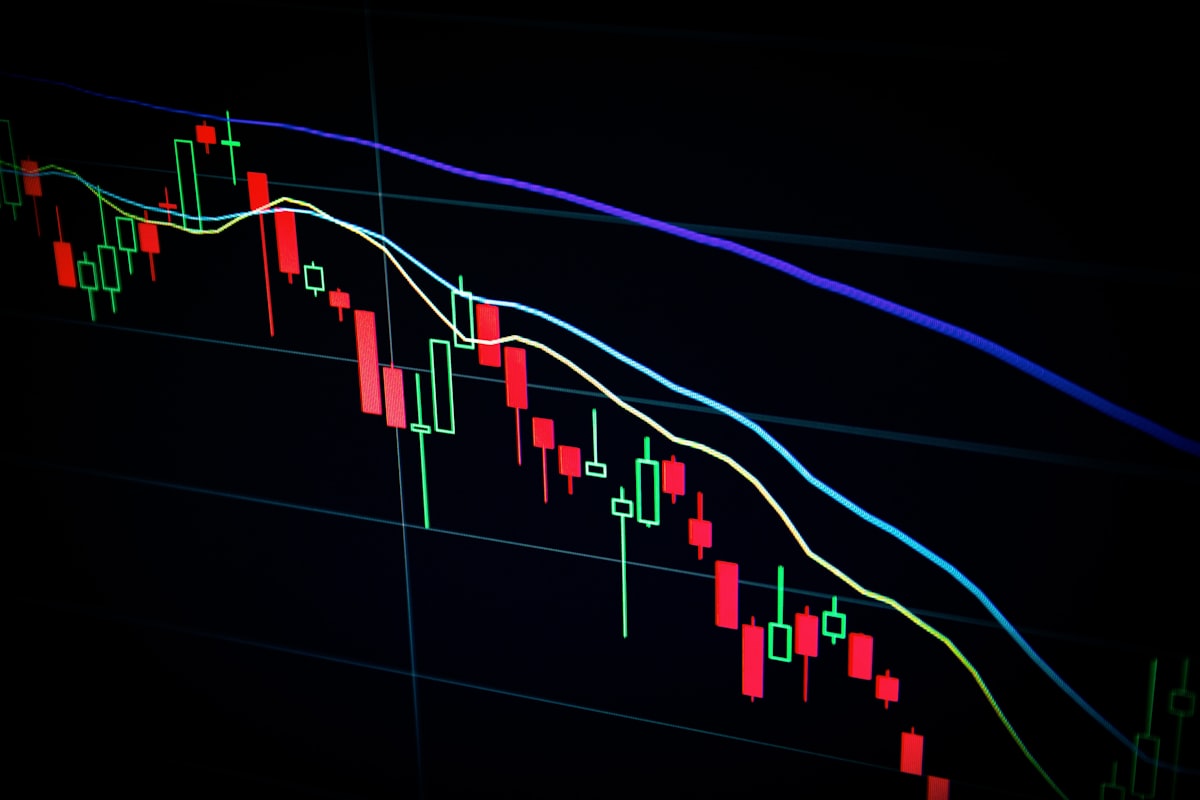


The Roaring Twenties Euphoria: 10% Margin Debt & Speculative Trusts
Between 1921 and September 1929, the Dow Jones Industrial Average surged six-fold, rising from 63 to a peak of 381.17 [1,2]. Industrial electrification, mass automobile production, and consumer radio adoption fueled widespread public belief that the United States had entered a "New Era" of permanent prosperity [1,2,3].
Beneath the surface, the market was fueled by extreme financial leverage [1,3,4]. Retail investors could purchase shares on 10% margin—putting down just $100 in cash to buy $1,000 worth of stock, borrowing the remaining $900 from broker loan desks [1,4]. Total broker loans to margin accounts surged to a staggering $8.5 billion by September 1929, exceeding the total volume of all US currency in circulation [1,2,4]. Simultaneously, complex investment trusts (such as the Goldman Sachs Trading Corporation and Insull utility pyramids) issued leveraged shares in other holding companies, creating fragile structural dominoes [1,3].
"By September 1929, broker loans to margin accounts reached $8.5 billion—exceeding the total volume of all physical currency circulating in the United States."
The October Panic: Black Thursday & Black Tuesday (October 24–29, 1929)
The crack began in September 1929 following London financier Clarence Hatry’s arrest and the Bank of England raising interest rates to 6.5% to stem gold outflows, drawing international capital away from Wall Street [1,2,5].
On Black Thursday (October 24, 1929), a wave of panic selling triggered record trading volume of 12.9 million shares; ticker tape machines lagged by over four hours, leaving traders in the dark [1,2]. A syndicate of Wall Street bankers led by Richard Whitney of J.P. Morgan temporarily stemmed the rout by placing bold bids above market price on blue-chip stocks like US Steel [1,2,3]. However, the dam broke on Black Tuesday (October 29, 1929): 16.4 million shares were dumped at opening bell, broker margin calls triggered automatic forced liquidations, and the market collapsed 12% in a single day, erasing $14 billion in paper wealth [1,2,3].
"On Black Tuesday, 16.4 million shares were dumped as automatic broker margin liquidations overwhelmed Wall Street, destroying $14 billion in a single session."
The Monetary Contraction: Why the Crash Became the Great Depression
The stock market crash alone did not cause the decade-long Great Depression; the catastrophic propagation was driven by systemic banking collapses and catastrophic policy errors [1,5,6].
In their landmark work A Monetary History of the United States, Nobel laureates Milton Friedman and Anna Schwartz demonstrated that the Federal Reserve allowed the US money supply to contract by one-third between 1929 and 1933 [1,6]. Rather than serving as a lender of last resort, the Fed raised discount rates to defend the gold standard while over 9,000 commercial banks failed, wiping out $7 billion in uninsured depositor savings and forcing wholesale deflation across industrial and agricultural markets [1,5,6].
Tariff Warfare & The Legacy: The New Deal and the SEC
In June 1930, President Herbert Hoover signed the Smoot-Hawley Tariff Act, raising tariffs on over 20,000 imported goods [1,7]. Foreign nations retaliated immediately with punitive tariffs, causing global trade to plunge by 66% and exporting the American depression worldwide [1,5,7].
The stock market ultimately bottomed in July 1932 at 41.22—an 89.2% collapse from its 1929 peak [1,2]. The catastrophic failure catalyzed the foundational financial architecture of modern capitalism under Franklin D. Roosevelt’s New Deal: the Glass-Steagall Act (separating commercial and investment banking), the creation of Federal Deposit Insurance (FDIC), and the establishment of the Securities and Exchange Commission (SEC) to regulate margin borrowing and outlaw wash-sale market manipulation [1,3,7].
Key Chronology & Milestones
Dow Jones reaches all-time peak of 381.17 before entering a volatile downward drift.
Black Thursday: 12.9 million shares traded; J.P. Morgan bankers stage temporary rescue pool.
Black Tuesday: 16.4 million shares dumped; margin liquidation wave destroys $14 billion in wealth.
Smoot-Hawley Tariff Act enacted, triggering global retaliatory tariffs and collapsing world trade by 66%.
Dow Jones bottoms at 41.22, having lost 89.2% of its peak value (a level not recovered until 1954).
US Congress passes Glass-Steagall Act, creates the FDIC, and establishes the SEC under Joseph P. Kennedy.
Cited Primary & Academic Sources
7 Verified RecordsJohn Kenneth Galbraith (Houghton Mifflin 1955) · archive.org
Classic economic history detailing the speculative holding trusts, margin lending euphoria, and regulatory vacuum of the 1920s.
Milton Friedman & Anna Jacobson Schwartz (Princeton University Press) · press.princeton.edu
Seminal economic analysis proving that Federal Reserve monetary contraction turned the 1929 crash into the Great Depression.
Peter Rappoport & Eugene N. White (American Economic Review 1993) · jstor.org
Econometric analysis of broker loan call rates and collateral dynamics during the October 1929 panic selling.
Eugene N. White (Journal of Economic Perspectives) · aeaweb.org
Analysis of dividend yields, price-to-earnings ratios, and investment trust leverage preceding the October peak.
Charles P. Kindleberger (University of California Press) · ucpress.edu
Hegemonic stability theory explaining how the absence of a global lender of last resort caused international financial contagion.
Federal Reserve Bank of St. Louis Review · stlouisfed.org
Historical study of 9,000 commercial bank suspensions between 1930 and 1933 and the implementation of FDIC insurance.
US Senate Committee on Banking and Currency (US Government Printing Office 1934) · govinfo.gov
Official congressional testimony exposing insider stock pools, preferred customer lists, and conflicts of interest on Wall Street.
Frequently Asked Inquiries
Click any inquiry to researchWhat caused the 1929 stock market crash?
The 1929 crash was caused by excessive 10% margin debt speculation, public utility pyramid holding trusts, agricultural overproduction, the Bank of England rate hike pulling foreign gold, and an overbought market with stock prices completely detached from corporate fundamentals.
What is the difference between Black Thursday and Black Tuesday?
Black Thursday (October 24, 1929) was the first major panic sell-off, briefly halted by a banking syndicate rescue pool. Black Tuesday (October 29, 1929) was the catastrophic collapse where 16.4 million shares were dumped, margin calls forced automatic liquidations, and the market plunged 12%.
Did the 1929 crash cause the Great Depression alone?
No. While the crash destroyed wealth and business confidence, the Great Depression was caused by the Federal Reserve allowing the US money supply to shrink by 33%, the failure of 9,000 banks without deposit insurance, and the global collapse of trade caused by the Smoot-Hawley Tariff Act.
Research delivered once a week.
One deeply investigated historical, scientific, or economic mystery grounded in primary sources. Pure evidence, zero noise.
Explore the Question Graph
Every investigation opens further avenues of historical and scientific inquiry. Select a connected question to research it immediately:
Related Research Investigations
Why Did Lehman Brothers Collapse? (The 72-Hour Timeline & Forensic Breakdown)
What Caused the 2008 Financial Crisis? (Subprime Mortgages, CDOs & Fed Timeline)
How Did John Law and the 1720 Mississippi Bubble Bankrupt France?
Have a question of your own?
Alcuin researches primary historical records, academic journals, and peer-reviewed archives with zero hallucinations.